
.
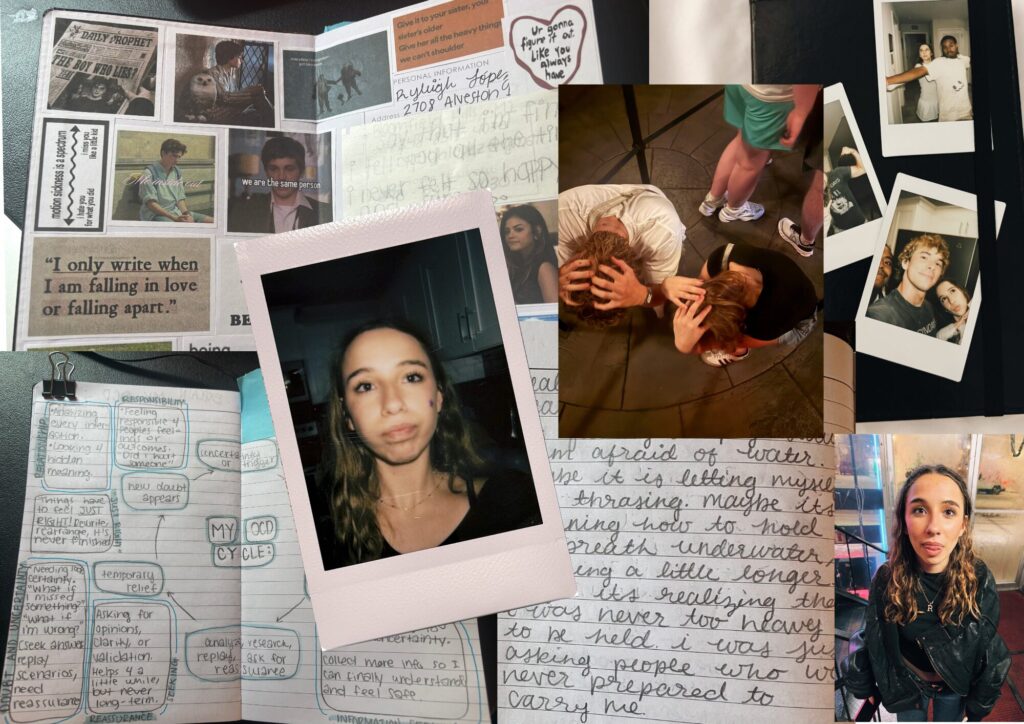
I think the best place to start with is seventeen-year-old me.
I was a senior in high school when I was diagnosed with severe depression and anxiety. I remember leaving class to sit in quiet, empty rooms to have sessions with my therapist, trying to make sense of a brain that felt like it was shutting down, and getting rid of any identity I had attached to it.
About a year before my high school graduation, I went through something traumatic that changed the way I understood safety, myself, and the world around me. And the really fucked-up part is that it felt like that one moment started a snowball of trauma.
After that, things changed.
I stopped sleeping. My dreams became strange and vivid. My thoughts became louder. They got repetitive. They became intrusive. I started obsessing over things that other people seemed to move on from so easily. My brain would latch onto a thought and refuse to let it go until I felt like I had solved it completely.
Except, a lot of the time, things happen for no rhyme or reason, and not everything can be solved inside your head. This is a difficult concept for my brain to grasp, but I digress.
I never really solved anything, no matter how badly I wanted to. I just became really good at finding answers that quieted my brain for a little while. But here’s the hard truth: relief and resolution aren’t the same thing.
When I was nineteen, I was diagnosed with obsessive compulsive disorder.
I don’t talk about it. I’m not sure who in my life really knows.
And I’ll be honest, I thought they had the wrong person. Not because I didn’t trust the medical diagnosis, but because I didn’t recognize myself in the version of OCD I’d always been shown through media.
What I Thought OCD Looked Like
Growing up, I loved Glee and Criminal Minds, and both shows helped create the picture of OCD I had in my head. There was Emma Pillsbury washing every grape individually, avoiding physical contact, and keeping everything around her painfully clean. Then there was an early episode of Criminal Minds about a woman whose obsessive compulsive symptoms were tied to committing arson.
Neither depiction felt anything like me. Emma was organized, spotless, and terrified of germs. Meanwhile, I am a slob. Like, seriously, there are probably three cups sitting beside my bed as I write this. I wasn’t scrubbing my food, organizing my closet by color, and I have also, most certainly, never intentionally set a building on fire. So when somebody told me I had OCD, my immediate reaction was basically: What the fuck.
I didn’t realize OCD could look like spending hours trying to figure out if I was a bad friend, sister, and daughter. Hours replaying conversations so many times that I could no longer separate what actually happened from my anxiety added afterward, or asking myself the same question ten different ways because my brain could make sense of every answer except the one it had already received. And yes, I’ll be sure to include embarrassing examples.
The Cycle I Kept Mistaking for an Answer
Over the past three years, I’ve started realizing that my OCD rarely allows me to have a simple thought. It pulls me into a cycle. And honestly, it can be debilitating.
My brain works like this: Think of something, anything. Okay, now let’s add some doubt and uncertainty.
Maybe I send a text. A completely normal text. Then I read it again and decide the tone feels weird.
Was this rude? Am I rude? Do I sound annoyed. Wait- am I being annoying? Did I accidentally hurt their feelings? Do they think I’m a bad person now?
It’s gotten to the point where I avoid texting people altogether.
But avoiding the text doesn’t actually end the cycle. It just gives my brain something new to question.
Did I wait too long to respond? Do they think I’m ignoring them?
So eventually, I text. Then I reread it. Then I ask five people how it sounds. Then I explain the entire situation. And without realizing it, I’ve fed the exact cycle that convinced me there was a problem in the first place.
The text was a simple “hello”, by the way.
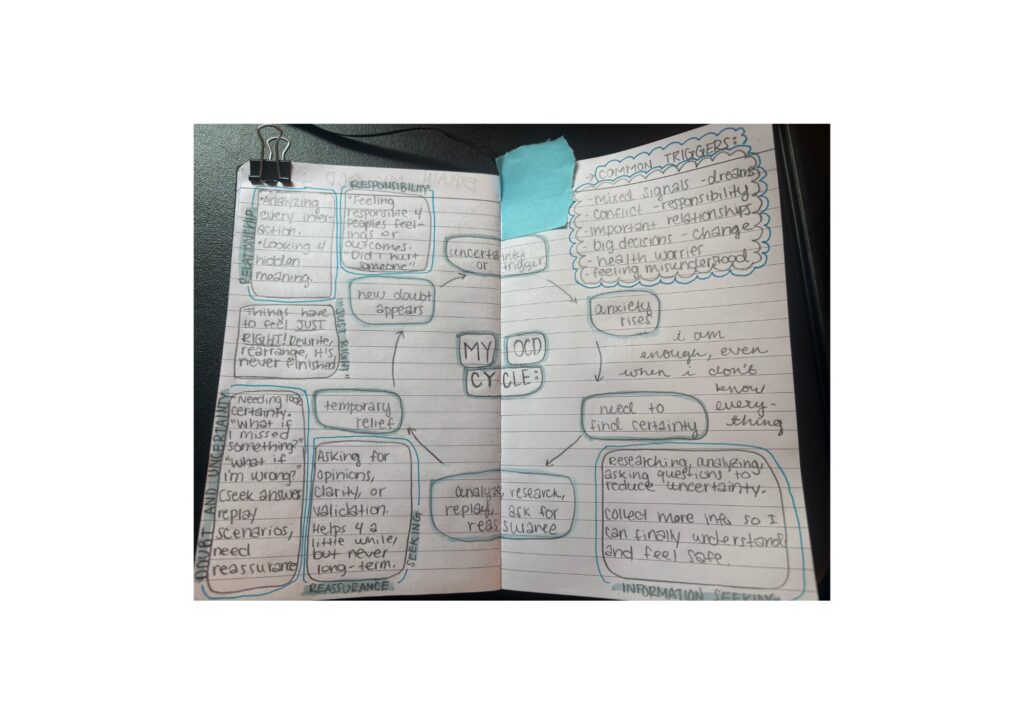
A diagram of the cycle, three years in the making 😉
Finding the Cycle in My Own Writing
The subject changes, but the cycle doesn’t.
Sometimes it attaches itself to a text. Other times, it attached itself to love.
When someone doesn’t want me in the way I hope they would, my brain refuses to accept that the answer might be simple. Maybe they aren’t ready. Maybe the timing is wrong. Maybe they live six hours away. Maybe they don’t want a relationship.
Instead, I turn toward myself.
I look in the mirror and try to locate the reason. Maybe I wasn’t pretty enough. Maybe I talk too much. Maybe I was too emotional, too available, too intense, or too mentally ill. Maybe I just wasn’t enough.
I replay everything that happened in the brief situationship. I search every conversation. Every intimate moment. Every goodbye. Looking for a definitive answer that would finally explain why I wasn’t chosen.
Because if I could just find the reason, maybe I could stop it from happening again.
This is what that search looked like on paper.
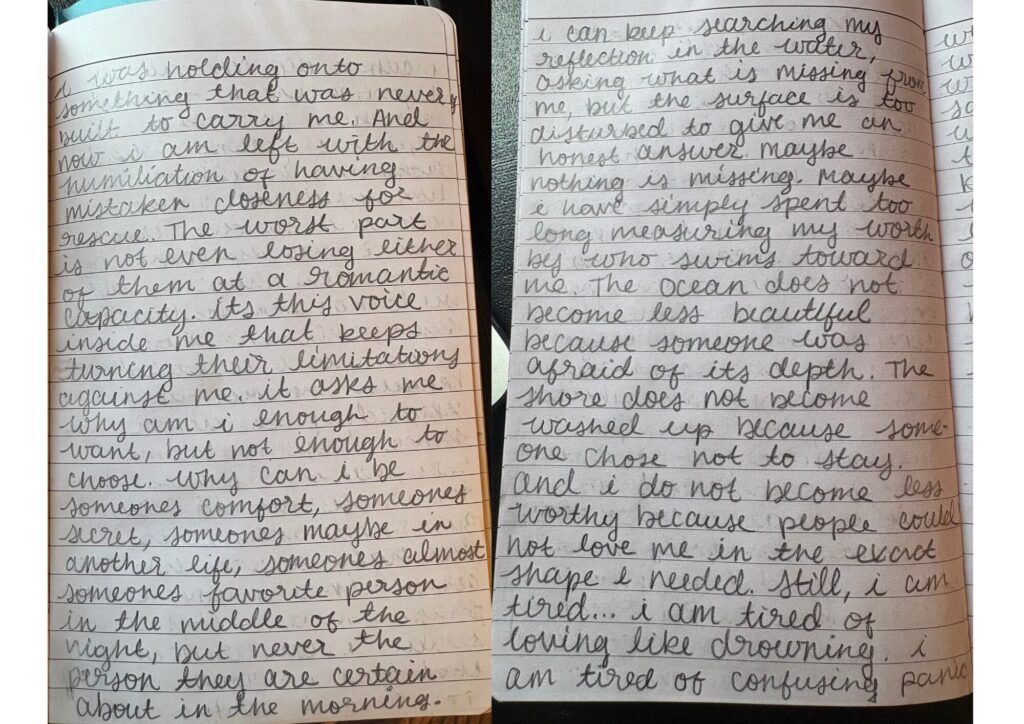
Somewhere between blaming myself and trying to understand myself, the question began to change. I was still searching for an answer, but I was beginning to wonder whether I was looking in the right place.
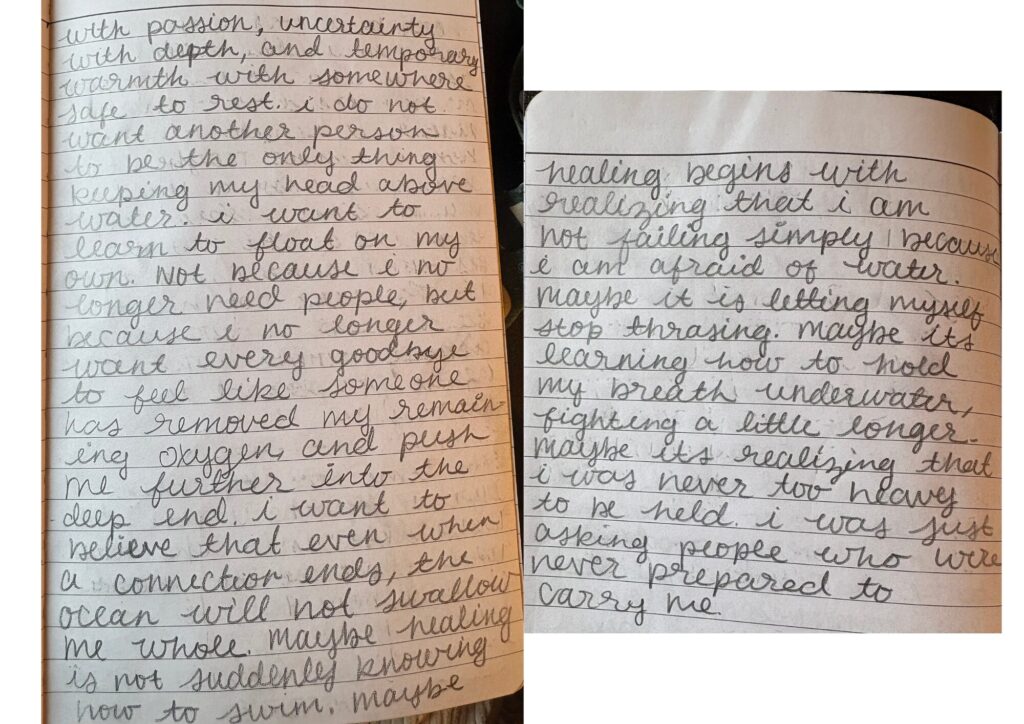
Please excuse any grammatical or spelling errors.
The evidence of my cycle is all over these pages. The subject was love, but the pattern was the same: doubt, anxiety, searching, temporary answers, and then more doubt.
I kept looking for one definitive reason I wasn’t chosen because my brain couldn’t tolerate leaving the question unanswered. I might never get an exact answer for why he couldn’t love me in the shape I needed. I might also never fully understand why I convinced myself I would be okay with something I knew might hurt me.
This was recent, and if I’m being honest it still bothers me.
I’ve gone through the cycle at least ten times since then. But I realized something: I cannot break the cycle while I’m still standing inside of it.
At some point, I have to stop searching for the perfect explanation— for him and for myself. I have to accept that there may never be an answer to complete enough to satisfy my OCD.
Stepping out of the cycle does not mean I suddenly understand everything or stop caring. Maybe it means I stop treating every unanswered question like another assignment.
I can still be hurt. I can still wonder why I accepted less than I deserved.
I just do not have to keep circling those questions until they become proof that I failed myself.
But thats just my theory.
Blog
Take a look inside my head, and journal.
-
OCD, In Theory: I Thought They Had the Wrong Person
I think the best place to start with is seventeen-year-old me. I was a senior…
-

Leave a Reply